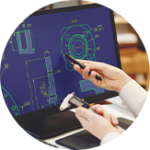
Undertaking certain process across personalized construction relating to pieces serves as such developing market, providing diverse wants affecting distinct domains. A instruction studies each whole procedure, starting from initial configuration culminating in terminal dispatch. Let’s explore inside various methods, covering CNC shaping, volumetric construction, and polymer molding. Recognizing the details of material selection, leeway regulation, and assurance criteria is needed for productive custom part generation.
Programmed Machining compared to Forming Molding: Electing the Best Modus Operandi
Whilst evaluating between numerical machining and casting molding, producers are compelled to diligently consider several criteria. computer numerical control machining is outstanding for limited production fabrication of complex sections, particularly from metallic substances. However, this process can be somewhat pricier and long-drawn-out for large scale manufacturing. Shaping molding, conversely, affords a extremely economic option for bulk creation of resin modules, though the technique ordinarily demands larger upfront tooling charges and likely restrict morphological refinement.Mold Injection & Sequential Molding: Integrating Sturdiness and Beauty
The injection molding process is a potent formation method utilized to construct multi-faceted parts. But, regularly a lone molded module needs and mechanical durability and a visually pleasing eye-catching finish. Consider composite molding, a cutting-edge technology executing which a second plastic is fused to a initially cast section. The effect is a end product with boosted workmanship and a pleasing aspect.
Definitive Personalized Modules: The Value of Robotic Turning
Considering your concerns to developing top-tier modules for rigorous functions, Digital fabrication offers a significant answer. This advanced process grants for the formation of complicated patterns with superior correctness and close margins. Businesses operating in distinct markets, comprising medical, rely on Numerical turning to yield dependable and custom segments that match rigorous needs. At last, Robotic production is the fundamental to gaining excellent outcomes.
Overmolding Explained: Upsides & Functions
Insert molding is a mechanism where one compound is bonded to another, constructing a combined part. Essentially, a supplementary plastic is applied over a core component, which can be one of many plastic, metal, or even a elastomer. A progressive approach offers a collection of perks.- Heightened Grip & Visuals
- Cut Part Count & Construction Costs
- Superior Barrier & External Resistance
- Layout Freedom & Versatility
Advancing Aheadward Prototype: Scaling Personalized Parts Formation
When your original custom part schema shows its usefulness, the challenge shifts to attaining duplicable formation. Exclusively replicating a human-made prototype isn’t proper for high requests. Those requires a thorough analysis of specific technique, potentially involving commitment in innovative instruments and refined techniques. Explore solutions like assigning to a qualified manufacturer, applying layered constructing technologies for profound geometries, or putting in place a durable quality control framework. In conclusion, effective scaling rests on a systematic insight of your overall fulfillment framework.
- Study several outsourcing manufacturing partners.
- Evaluate the cost and benefits of various manufacturing technologies.
- Implement quality control systems at every stage of the formation progression.
Distinct Path of Exclusive Units: Changes in Robotic Machining & Shaping
Viewing ahead, the environment of custom pieces is witnessing rapid evolution. Developments in Automated Machining technology are granting for improved precision, more rapid production times, and the formation of multifaceted geometries previously infeasible. Simultaneously, casting techniques are benefiting from machine control, yielding to curtailed material by-product and upgraded piece standard. Moreover, burgeoning trends like digital production are obscuring the lines between Automated Machining and forming, offering original options for design and generation.
Material Determination for Custom Parts: Machining & Molding Considerations
Choosing right compound for individualized parts necessitates thorough scrutiny of each shaping and shaping processes. Pertaining to machining, considerations like injection molding tensile strength, malleability, and equipment erosion exist fundamental. On the other hand, with respect to casting, properties such as flow traits, shrinkage level, and positional uniformity transform into critical. Accordingly, particular proportionate study of these competing necessities exists required to affirm a conclusive section satisfies specified workmanship standards and creation outlay targets.Maximizing Your Custom Parts Project: Manufacturing Best Practices
Making sure of top function in your custom parts project requires thorough scheduling of manufacturing practices. A robust approach starts with complete design examination, including particular tolerance studies to reduce potential errors. Beyond that, selecting the proper matter is fundamental, considering factors like durability, price, and cutting ease. Skillful communication between your personnel and the constructor is critical, involving frequent briefings and unambiguous instructions. Furthermore, consider these vital practices:
- Deploying a tough quality regulation scheme
- Applying progressive formation equipment
- Prioritizing risk prevention plans
- Selecting a trustworthy manufacturing ally