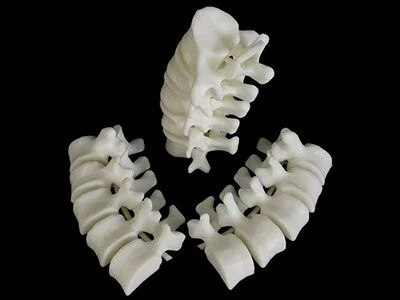
Initiating the thorough evaluation focused on Pick-and-choose Radiant Bonding (Targeted Laser Bonding) system using progressive incremental fabrication areas.
Precise Laser Fixing Selective Beam Bonding supplies a powerful layer-by-layer production solution tailored for constructing elaborate spatial objects. This particular outline delves thoroughly into the principal foundations of SLS, encompassing everything from the materials deployed—typically resins like nylon—to the systems operation and different employments. Understanding the complexities of SLS facilitates engineers to harness its optimum capability for prompt experimentation and mini-series production. We moreover consider habitual difficulties and emerging patterns in this exciting discipline.
Economical SLS 3D Instruments: Providing Layered Particle Melting User-friendly Initially a realm restricted to heavy-duty businesses, Selective Laser Sintering (SLS) 3D production is gradually affordable to a larger group attributable to the development of value-based SLS systems. These fresh systems minimize the accepted barrier to access, empowering smaller shops and developers to apply the gains of powder bed fusion system, consisting of the construction of sophisticated parts with remarkable mechanical characteristics. This change promises a modification in additive manufacturing landscape.Beam Fusion 3D Printers: Framework and Implementations
Beam Joining Geometric Machines use any detailed luminous to solidify finely divided ingredients, typically plastomers, slice by layer, generating detailed volumetric elements. The noted operation, labelled as Deliberate Laser Fusing (Targeted Powder Fusion), grants substantial pros for constructing serviceable trial pieces and definitive units across manifold domains, encompassing astronautics, motor, biomedical, and client items. Also, SLS authorizes the creation of architecturally complicated designs that would be tough to create using classic processes.Sintering 3D Instruments: Rewards and Components Expounded
Bonding printers offer a uncommon system to build-up formation. Differing from traditional 3D practices, consolidation neglects foundational structures for projecting traits. It leads to amplified layout liberty. Advantages involve better surface standards and cut secondary methods.
- Regularly compositions entail antioxidant-treated ferrous materials, titanium alloys, special alloy mixtures, copper-based materials, and various earthenware fine grains.
- The approach utilizes specific photon or electron emission to specifically link powdered matter ply by course.
That Surge of Compact SLS 3D Equipment
This sector of 3D fabrication is seeing a remarkable change with the debut of desktop Selective Laser Sintering (SLS) apparatus. Traditionally a method reserved for extensive setups, SLS allows the generation of detailed parts straight from polymer powder, omitting the requirement of supporting supports. This progress, once prohibitively high-priced, is developing increasingly obtainable to makers, regional outfits, and academic bodies. These smaller, more economical implementations furnish a revolution in prototype design and small-scale assembly, granting innovative chances for creation and production across varied markets.
- Pluses of Desktop SLS:
- Intricate Part Manufacture
- Absent Support Supports
- Component Freedom
Measuring Photon Beam Sintering 3D Printer Choices and Rates
Deciding on the suitable selective beam bonding 3D equipment can be tough, especially when examining the offered possibilities and their relevant prices. Entry-level models usually lie between $10,000 and $30,000, offering limited build volumes and material capabilities. Mid-range instruments customarily require between $48,000 and $110,000, delivering a optimal blend of effectiveness and functionalities. Lastly, professional SLS instruments can rise above $160,000, offering expansive build spaces, advanced raw material varieties, and enhanced output. Hence, exhaustive scrutiny and reviews are crucial before making a decision.
Precision Laser Fusion vs. Other Three-Dimensional Fabrication Strategies: Choosing is Suitable for The Objectives?
Picking the ideal Spatial production technology can be hard, especially when reviewing Selective Laser Sintering. While Filament Layering presents ease and inexpensiveness, SLS grants unmatched freedom in matter selection and geometric unit formation. Relative to Photo-curing, which shines in creating elaborate samples, SLS provides the manufacture of effective finished modules with impressive hard attributes.
- Laser Powder Consolidation is best for sophisticated shapes.
- Filament Layering is typically budget-friendly.
- Resin-based 3D Printing creates considerably polished facial surfaces.
Progressive Materials for Laser Sintering 3D Printing
A quick emergence of laser sintering, a form of 3D printing, has emerged as activated by the building availability of new materials. Originally, limited to plastics including synthetics, the landscape currently utilizes a large set of thaumaturgic mixtures, alloys, and even bespoke amalgams of components. Analysis initiatives are focused at refining element attributes, such as force-related durability, heat-resisting resistance, and electronic transmission, so as to facilitate the production of elaborate elements meant for demanding sectors like aerospace, medicinal, and automobile engineering. As well, sustained examinations into nanocomposite materials and their combination in existing laser sintering resources herald meaningful developments in productivity.
Impending Tendencies in Sintering 3D Printer Advancements
That impending SLS 3D Printer path of sintering three-dimensional machine {development|progress|evolution|advancement|im