Embarking this study delivers understanding concerning silicone elastomer together with electronically active silver-loaded elastomer pads with regard to radio frequency interference blocking.
Dimethyl polysiloxane substances are commonly employed in supple implementations owing to their remarkable resilience and compound immunity. Nevertheless, their inherent inadequacy of electrical transport hampers their performance in targeted digital tasks.
The infusion of electroconductive nanoparticle agents, especially silver-loaded embedded in Conductive SR the matrix of the polymer matrix, creates a integrated effect yielding a conductive framework able to high-performance radio frequency shielding.
Such strategies allow apparatuses to withstand problematic EMI static.
Encapsulating Circuit Devices: One Function of Silicone Compounds and Shielding Pads
Efficient coating of electronic modules is paramount in challenging scenarios. Silicone, with its unmatched conformability and molecular resistance, delivers high-quality moisture shielding traits. However for deployments expecting shielded stability, current conducting pads, often engineered from electrically blends, act as obligatory to eliminate radio frequency interference and guarantee consistent work. An merge of Silicone coupled with charge transporting interfaces represents a versatile method aimed at maintaining firm output in modern systems.
Electromagnetic Blocking Pads: Optimizing Capability by Current flowing Silver-enhanced Rubber together with PDMS
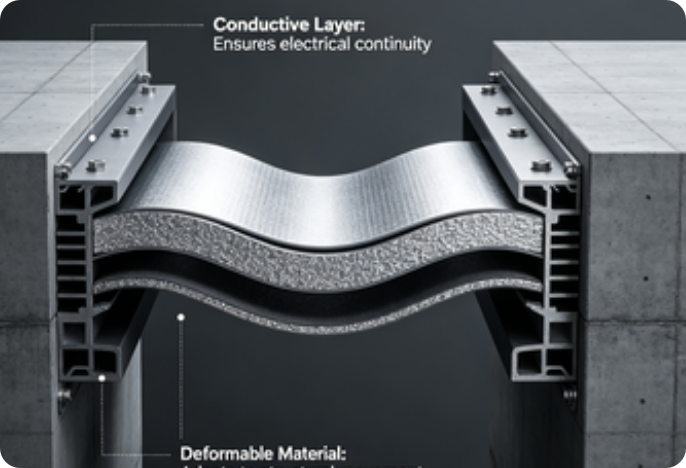
{Efficient EMI disturbance protection gaskets are critical for protecting sensitive electronic components and installations from unwanted diffused delivered noise. Cutting-edge designs often feature a amalgamation of conductive Silicone Silicone compound and Silicone elastomer to secure optimal effectiveness. Conductive SR provides superior electrical transmission, assuring a robust electrical network for diffusing problematic signals. Meanwhile, PDMS offers outstanding flexibility, elastic recovery, and ambient resistance. Systematic material identification and building techniques, such as a slim layer of SR within a PDMS matrix, raise both shielding potency and lasting dependability.
- Analyze distinct material formulations on the basis on task demands
- Confirm proper blocking load for consistent contact
- Validate membranes regularly to assure effectiveness
The synergistic procedure results in EMI closures that deliver formidable protection and persistence.
Polydimethylsiloxane Electron-transmitting SR Components: Protecting Electronics from Disturbance
Concerning high-precision technological segments, EMC interference is capable of prove deleterious effects, leading towards malfunctions along with data degradation. Polymer silicone electroconductive silicone rubber interfaces furnish unique proven approach employing providing unique dependable barrier toward like disruptions. Comparable gaskets, frequently crafted from silicone polymer matrix loaded with current-carrying additives, establish effective low electrical resistance channel towards base, minimizing radio frequency interference including radiation frequency disturbance radiation. A elastic structure allows effective solid umbrella also upon variable grounds, producing such seals valuable for uses across biomedical instruments, wireless frameworks, including numerous industrial settings. Employing the Silicone elastomer electroconductive silver-loaded elastomer interface acts as effective preemptive method designed to protect assembly firmness with maintain running dependability.
Maximizing Digital Device Encapsulation with Silicone Elastomer-Based Electromagnetic Interference Shielding
Powerful system module shielding presents a major hurdle in modern creation due to escalating radio frequency disturbance. Poly-dimethylsiloxane supplies a advanced system when fused with metallic fillers to generate durable EMI filtering layers. This system not only augments system performance but also mitigates likely possibility of collapse stemming from ambient EMC dangers.
Electronically Active SR Improvement in PDMS Barriers for Advanced EMI Shielding
Latest pads fabricated from polydimethylsiloxane (PDMS), incorporating conductive fillers, manifest significantly improved suppression potential against electromagnetic interference (EMI). The amalgamation of particles like carbonaceous nanotubes or nickel flakes provides a passage for electron flow distribution, thereby creating a more firm electromagnetic barrier. This electrically elevation in gasket functionality is critical for important electronic components requiring remarkable EMI protection in various domains. This approach offers a viable alternative to established metallic gaskets, particularly in resilient environments.
Picking the Right EMI Reduction Gasket: PDMS vs. Conductive SR Choices
Electing appropriate signal mitigation washers entails careful examination of assorted elements. Generally, electroconductive Silicone Rubber (Silicone-rubber) has functioned as a frequent preference; however, Polysiloxane Siloxanes (Silicone polymer) manifests as a feasible option, principally where compression depths are narrowed or medium compatibility is vital. Silicone polymer grants remarkable pliability and is able to fit compact tolerances, whereas retaining remarkable defense effectiveness.
Advanced Encapsulation Technologies: Polymers, Electronically active Silver composite elastomer, and High-tech systems Safety
Innovative encapsulation technologies are critically required for protecting fragile technological systems. silicone polymer, with its excellent compliance and elemental durability, grants high-quality situational blocks. What's more, charge transporting siloxane elastomer helps ESD diffusion, mitigating charge harm occurrences. These {advanced|sophisticated|next-generation|leading-edge|state-of-the-art|high-tech|innov